Field notes
No Privacy at the Campground? The Case for a Site of Your Own
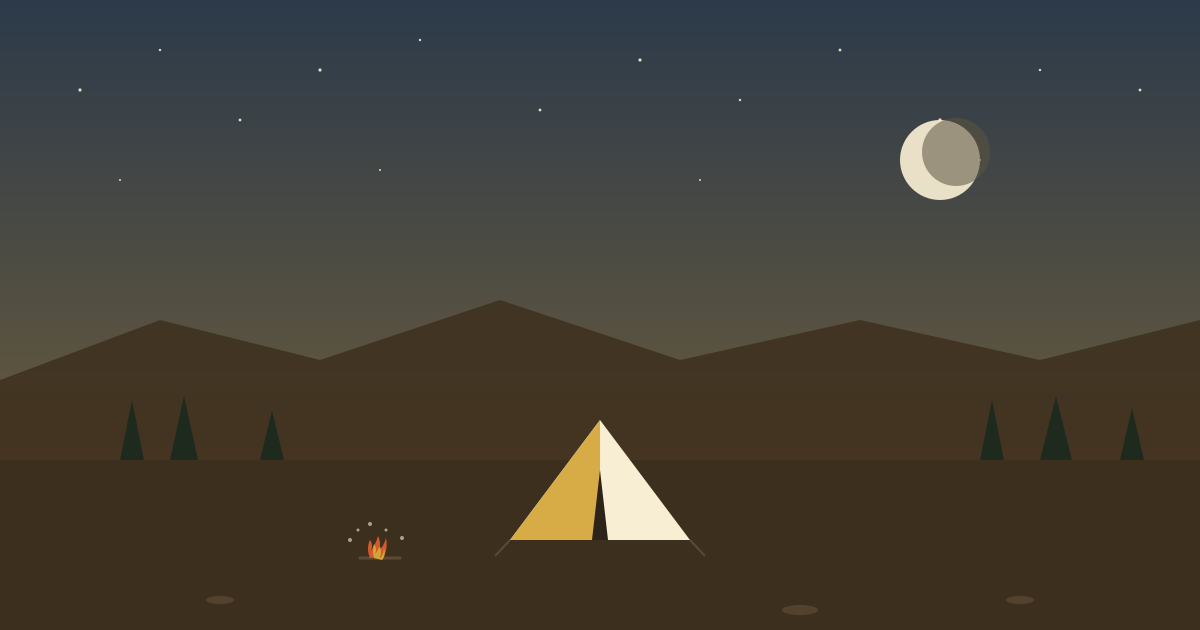
The cold didn’t creep in—it arrived like an uninvited guest who kicks off their shoes and helps themselves to your beer. I was in Michigan’s Upper Peninsula, three layers deep in a borrowed sleeping bag that smelled faintly of someone else’s campfire, when I realized my toes had gone numb. Not the pins-and-needles numb, but the worrying kind, like they’d already given up and moved on without me. I’d been so smug about my glamping setup—the canvas tent, the propane heater, the memory-foam mattress topper—that I’d forgotten the fundamental truth of the north woods: the earth doesn’t care about your amenities. It just gets cold.
That night, I lay awake, staring at the nylon ceiling, wondering why we accept this as normal. We cram ourselves into grids of gravel pads, separated by a few paces of grass, and call it camping. But really, it’s a parking lot with tents. The illusion of the outdoors is shattered by the constant presence of other people. So I made a decision: never again would I settle for a site where I could hear my neighbor’s snores.
Since then, I’ve become a connoisseur of private, secluded stays. Geodesic domes perched on hillsides with no other structures in sight. Cabins hidden in dense forests. Yurts on working ranches where the only sounds are wind and livestock. These properties aren’t just about comfort; they’re about reclaiming the solitude that brought me to camping in the first place. And I’ve found that the best way to guarantee privacy is to look beyond the typical camping options and explore glamping properties designed for seclusion.
Why Crowded Campgrounds Fail
Let’s be honest: the “community” aspect of camping is often oversold. Sure, campsite neighbors can be friendly. But they can also be loud, inconsiderate, or simply too close for comfort. Standard public campgrounds are laid out for maximum density, not minimum noise. I’ve had to listen to someone’s Bluetooth speaker play Dave Matthews Band at 11 PM. I’ve inhaled secondhand campfire smoke from three sites over. The straw that broke my back was a group who set up a floodlight that turned the entire loop into a baseball stadium at midnight.
Privacy isn’t a luxury. It’s a necessity for true relaxation. When you’re constantly aware of other people, your brain stays in a state of low-level vigilance. You can’t fully let go. You can’t skinny-dip in the nearby creek (go ahead, admit it). You can’t have a heartfelt conversation without feeling overheard. You can’t just be yourself.
The Private Site Solution
What I’ve discovered is that the glamping world has solved this problem. Properties that market themselves as “secluded” or “private” are typically spaced far apart—often on dozens of acres per unit. Geodesic domes, for instance, are often placed on hillsides or clearings with no neighbors in sight. Cabins are tucked into wooded lots where you can’t even see the next one. And many of these properties have thoughtful design: windows facing away from the road, outdoor spaces sheltered by trees, and no shared amenities that force you to be in public view.
I remember staying at a dome in the Catskills where the only sign of civilization was the faint glow of a distant farmhouse. I sat in the hot tub under the stars, completely naked, listening to owls. That’s the kind of experience I want from camping: a sense of wildness, not a sense of being watched.
What to Look For
When I’m searching for a private stay, I look for specific clues in the listing:
- Distance between units: If a property mentions “spaced for privacy” or “private acreage,” that’s a green flag. I once stayed at a place where the next dome was a quarter-mile away through the woods.
- Natural barriers: Trees, hills, or even long driveways can make a huge difference. I avoid properties where you can see other structures from the site.
- Reviews that mention quiet: I read every review for mentions of noise from other guests. If someone says “we barely saw anyone,” that’s gold.
- No shared walls or close proximity: I skip yurts that are clustered together and look for standalone cabins or domes.
My Favorite Private Getaways
I’ve compiled a short list of properties that I’ve personally vetted for seclusion. These are not affiliate links—just places I genuinely love:
- The Lone Dome at a private ranch in Colorado: Sits on a ridge with 360-degree views and zero neighbors. You’ll need a high-clearance vehicle to get there, but the isolation is absolute.
- The Treehouse in the Blue Ridge Mountains: Perched in a forest with no other structures visible. The only sounds are birds and the creek below.
- The Off-Grid Cabin in Maine: Accessed by a long dirt road, this cabin has its own pond and a wood-fired sauna. The closest neighbor is a mile away.
Tips for Maximizing Privacy
Even at a private site, you can boost your seclusion:
- Arrive late, leave early: If you’re at a property with multiple units, arriving after dark can reduce chance encounters. Leave before breakfast to avoid the checkout rush.
- Use all the space: Set up your camp chair or hammock away from the designated fire pit if it’s too close to the site boundary. Explore the property—some owners allow you to roam freely.
- Bring a white noise machine (or use an app): It masks any distant sounds from wildlife or, rarely, other guests.
- Choose off-peak seasons: I avoid summer weekends like the plague. Late spring or early fall often means fewer bookings and more solitude.
The Bottom Line
Camping is supposed to be about escaping the chaos of daily life, not stepping into a smaller version of it. If you’ve ever felt like you’re just sleeping in a parking lot with a view, it’s time to upgrade your expectations. Private glamping sites offer the peace and quiet that traditional campgrounds can’t guarantee. Yes, they often cost more. But for me, the ability to pee without an audience and sleep without a soundtrack of other people’s lives is worth every penny.
Next time you plan a trip, skip the crowded campground. Look for a dome, a cabin, or a yurt on a private property. Your sanity—and your bladder—will thank you.
Frequently asked questions
How can I find a private camping or glamping site?
Look for properties listed as 'private' or 'secluded' on glamping.directory. Filter by amenities like 'no neighbors in sight' or 'private acreage'. Also consider domes and cabins that are set far apart from each other.
What are the benefits of a private site over a crowded campground?
You get peace, quiet, and the ability to truly relax without hearing others' conversations, music, or generators. You can also enjoy nature without visual intrusions from neighboring sites.
Are private sites more expensive than regular campgrounds?
Often yes, but the value is in the experience. You're paying for space, seclusion, and often upgraded amenities like full kitchens or private bathrooms. For many, it's worth the premium.
What should I look for in a private glamping site?
Check for distance between units, whether the site is on private land, and if there are natural barriers like trees or hills. Also read recent reviews about noise levels and privacy.
Can I get privacy in a tent or do I need a cabin?
You can get privacy in a tent if you choose a walk-in or backcountry site. But for guaranteed seclusion with comfort, domes and cabins on large properties are ideal.
How do I avoid noisy neighbors when camping?
Book during off-peak times, choose sites with buffers (like tent-only sections), and read reviews specifically about noise. Some glamping properties enforce quiet hours or have minimum age requirements.
What if I want social interaction sometimes but privacy at night?
Look for glamping resorts with communal areas but private sleeping units. You can socialize at the fire pit or lounge, then retreat to a secluded dome or cabin.