Guide
Leave No Trace at a Glamping Site (Yes, It Still Applies)
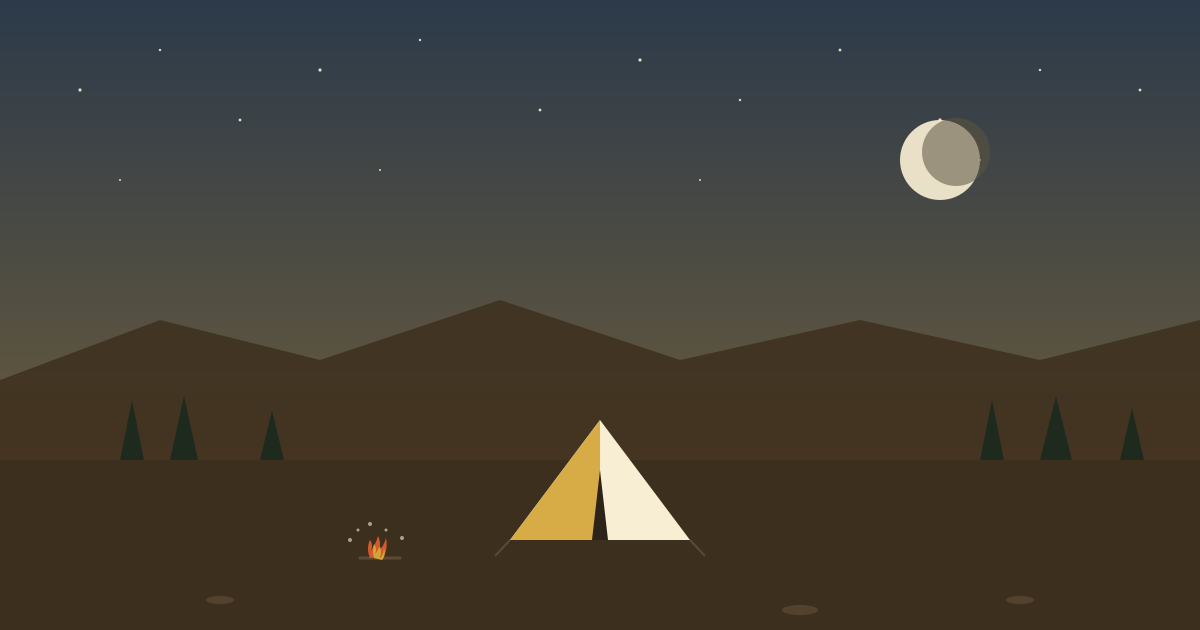
It was a crisp October evening in Colorado, under 40°F, and the aspen leaves had turned a shocking yellow. I was staying in what I’d call a high-end safari tent: wood stove, queen bed, Persian rug. Luxury. After a day of hiking, I built a small fire in the stone ring outside, roasted a few marshmallows, and crawled into the flannel sheets. The next morning, hungover on mountain air, I stepped out to find the fire ring choked with crushed beer cans, half-eaten hot dogs, and plastic wrappers. Not my mess—the previous guests’—but I was the one staring at it. That trashed fire ring made me rethink what ‘luxury camping’ really means. If we’re paying for comfort, shouldn’t we also pay for responsibility?
Leave No Trace: The Original Camping Ethic
Leave No Trace (LNT) is a set of seven principles designed to minimize human impact on the outdoors. They apply whether you’re thru-hiking the PCT or unzipping a bell tent in Oregon. The principles are: Plan Ahead and Prepare, Travel and Camp on Durable Surfaces, Dispose of Waste Properly, Leave What You Find, Minimize Campfire Impacts, Respect Wildlife, and Be Considerate of Other Visitors.
For glampers, the temptation is to think: “I’m in a yurt with a bed. I’m not ‘camping’—so LNT doesn’t apply.” Wrong. The moment you step onto that property—even if it’s a decked-out treehouse—you’re impacting the ecosystem. The difference is that glamping often puts fragile landscapes within easy reach. A group of friends who’d never carry a tent can suddenly party in a pristine meadow because they booked a glamping dome. The potential for damage is high.
The Trashed Fire Ring Lesson
That morning in Colorado, I felt gross. I cleaned the fire ring, packed the trash into my car, and drove it to a dumpster. But the damage was done: ants crawling on discarded food, a scorched patch of grass where someone had moved the fire ring, and a smell of stale beer. It wasn’t just unsightly; it was a broken promise to the land. I realized that glamping—with its comfort and convenience—can create a disconnect. We forget that the fire ring is not a garbage can, the forest is not a party venue, and the river is not a sink.
Principle 1: Plan Ahead and Prepare for Glamping
Before you book, research the site’s specific LNT policies. Some glamping resorts in sensitive areas (like California redwood groves) have strict rules about pets, food storage, and trails. Call the host. Ask: “What’s your waste disposal system? Can I have a campfire? Are there wildlife closures?” Pack as if you were tent camping: bring a reusable water bottle, a trash bag, and a small shovel for buried waste if there’s no toilet.
Bespoke Tip #1: Pre-Pack a “Leave No Trace Kit”
I now carry a small pouch with: a lightweight trowel (for cat holes if needed), a roll of biodegradable dog poop bags (they’re strong and seal well), a collapsible silicone cup for washing dishes away from water sources, and a mini hand broom. This kit has saved me more times than I can count—especially in a yurt where the host said “there’s a compost bin” but it was full.
Principle 2: Travel and Camp on Durable Surfaces
Glamping sites often have designated paths and platforms. Use them. Don’t take shortcuts through meadows or trample vegetation around your tent. If you’re staying in a cabin with a deck, keep furniture on the deck—don’t drag the chairs into the grass to create a new sitting area. That grass will die. I’ve seen beautiful sites with bald patches from people moving picnic tables. The host spent years nurturing that lawn; respect it.
Principle 3: Dispose of Waste Properly
This is the big one. “Pack it in, pack it out” doesn’t stop because you’re in a furnished tent. Bring your own trash bags, and take all garbage with you—even if the site promises weekly pickup. Why? Because animals get into bins, and wind scatters litter. Also, food scraps: don’t toss apple cores into the bushes. They’re not native food sources; they attract raccoons and bears. Human waste: use the provided toilet. If there’s none, dig a cat hole at least 200 feet from water, trails, and camp. And please, no burning trash in the fire ring. That creates toxic smoke and leaves residue.
Bespoke Tip #2: The “No-Wipe” Trash Bag System
For greasy or messy food, I use a simple trick: line a small bag with a paper towel or napkin, then double-bag it. For example, after cooking bacon, I put the greasy paper towels into a ziplock bag, then into my main trash bag. This prevents leaks and smells. Also, carry a small spray bottle with a 1:10 vinegar-water solution to clean dishes instead of soap. Biodegradable soap still pollutes if rinsed into streams.
Principle 4: Leave What You Find
Glamping sites often have natural decorations: pretty rocks, fallen antlers, wildflowers. Resist the urge to take a souvenir. Leave them for the next person and for the ecosystem. Antlers are a source of calcium for animals; rocks can be habitat for insects. Same goes for any site-provided items like books, blankets, or games. Don’t swipe them. I once stayed at a domes site where the previous guest had taken all the firewood from the shed, leaving none for us. That’s not cool.
Principle 5: Minimize Campfire Impacts
Fire rings are for fires, not for trash. Use only local, purchased firewood to prevent spreading invasive pests. Keep fires small—a campfire for cooking and warmth, not a bonfire. Burn all wood to ash, and then douse with water, stir, and douse again until cold. Never leave a fire unattended. And if the site has a gas fire pit, use that instead—it’s cleaner and less impactful.
Principle 6: Respect Wildlife
Glamping often places you in prime wildlife habitat. Don’t feed animals, even cute chipmunks. Secure all food and scented items in bear-proof containers if required (check with host). Observe from a distance. I once watched a group of glampers try to get a selfie with a deer. The deer bolted, stressed. That’s not a win.
Principle 7: Be Considerate of Other Visitors
Glamping sites are often close together. Keep noise down, especially after dark. Don’t let your kids run through other people’s sites. If you’re playing music, use headphones. The goal is for everyone to enjoy nature, not your playlist.
A Confession: My Own LNT Fail
I’m not perfect. On a trip to a forest in Washington, I left a plastic water bottle on the porch of a glamping tent. I didn’t realize until I was home. I felt awful. Now I do a “trash sweep” before I leave: circle the site, check under furniture, inside the fire ring, and around the edges. It takes two minutes. That bottle might still be there, but I’m doing better.
Hosts: They Want You to Care
Most glamping hosts are passionate about the land. They’re not just running a business; they’re stewards. When you practice LNT, you’re respecting their work. Leave a positive review that mentions how well the site was maintained—and how you tried to leave it that way. It encourages others.
Conclusion: Glamping Is Still Camping
The trashed fire ring taught me that luxury doesn’t exempt you from ethics. Whether you’re in a safari tent or a cabin, the land is the same. The principles of Leave No Trace are not a punishment; they’re a way to ensure that these beautiful places remain beautiful for generations. Next time you zip up your glamping tent, ask yourself: if everyone who stayed here left a trace, what would this place look like? Then be the one who leaves none.
Frequently asked questions
Does Leave No Trace really apply to glamping?
Yes, absolutely. Glamping sites are often in sensitive natural areas, and even if you're in a yurt with a bed, your impact on the land, water, and wildlife is real.
What are the biggest glamping-specific LNT violations?
Leaving food scraps in fire pits (attracts wildlife), using excessive firewood, moving furniture or decor outside, and washing dishes with soap (even biodegradable) in streams or lakes.
Can I have a campfire at a glamping site?
Usually yes, but only in designated fire rings. Keep fires small, burn only local firewood, and fully extinguish before leaving. Never leave trash or half-burned items in the pit.
Is it okay to use provided toiletries or leave behind amenities?
Use provided amenities sparingly. Take all unused items with you. Even 'natural' soaps can harm aquatic ecosystems if they wash into water sources.
Should I bring my own trash bags to a glamping site?
Yes, always. Even if the site claims to have full service, pack out all your trash. Some remote glampsites have limited waste management.
What about generators or loud music?
Respect quiet hours and natural soundscapes. Generators disturb wildlife and other guests. Opt for solar chargers or battery packs.
How do I leave a glamping site better than I found it?
Sweep the cabin or tent, pick up any litter (even if not yours), don't rearrange furnishings, and report any damage to hosts.