Field notes
Is Glamping Bad for the Land? An Honest Environmental Reckoning
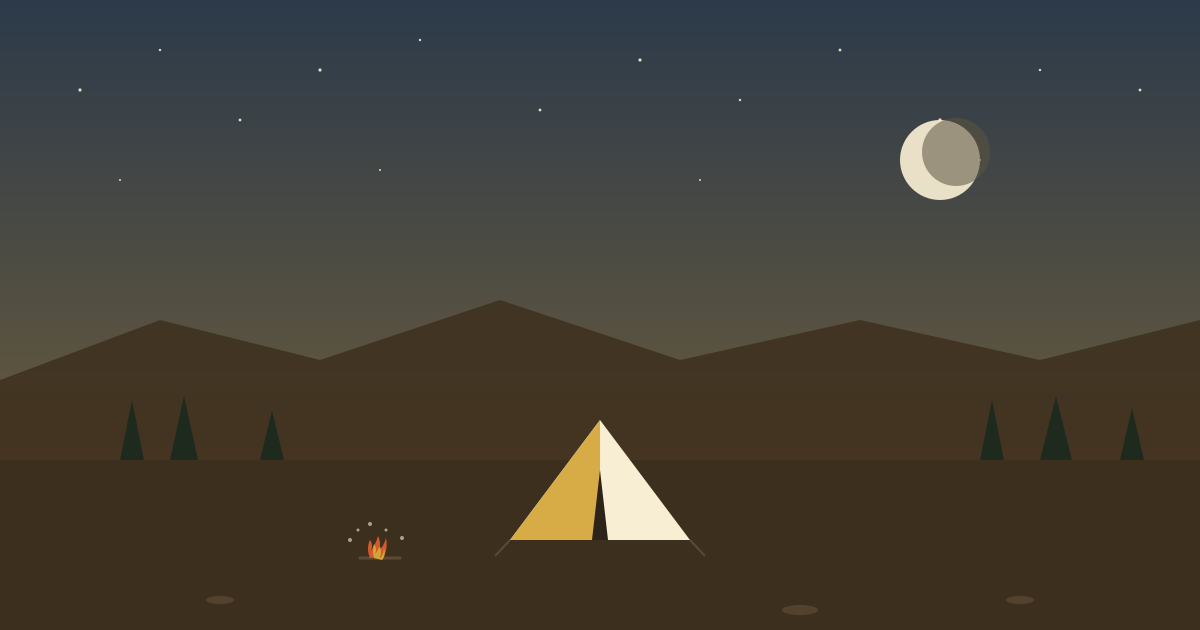
A Dusty Afternoon in the Meadow
I remember the exact moment my love affair with glamping curdled. Hot July afternoon in Colorado. I’d driven two hours to review a new site that promised “luxury tents in a pristine mountain meadow.” The photos online were dreamlike: canvas bell tents scattered among wildflowers, a creek glittering in the background. But when I arrived, the dust choked me.
The owner had bulldozed a gravel road straight through the meadow to reach every tent platform. The wildflowers were gone—replaced by cheatgrass and erosion ruts. A generator hummed behind the main lodge, and the creek—the one that was supposed to be a selling point—ran milky with sediment. I sat in my rental car, windows up, questioning everything. Was this the price of comfort? Was I part of the problem?
That afternoon forced me to reckon with an uncomfortable truth: glamping, for all its Instagram appeal, can be terrible for the land. But it doesn’t have to be. Here’s what I’ve learned after years of sleeping in everything from a geodesic dome in Oregon to a treehouse in North Carolina.
The Meadow That Broke My Heart
Let’s dig into that Colorado site, because it’s a textbook case of what not to do. The owner, a well-meaning entrepreneur, had bought 40 acres of high-altitude meadow—a fragile ecosystem that takes decades to recover from disturbance. He then built 15 tent platforms, each with a wooden deck, a fire pit, and a gravel path. He installed a septic system for the shared bathhouse, dug a well, and ran underground power lines to each tent.
The result? A scarred landscape that would take years to heal. The gravel roads prevented water infiltration, causing runoff that carved gullies. The septic system leached nutrients into the creek, fueling algae blooms. And the constant human presence—even in “eco-friendly” canvas tents—disrupted ground-nesting birds and small mammals.
I talked to a local ecologist who studied the site. He told me the meadow had lost 30% of its native plant species in two seasons. “The problem isn’t the tents,” he said. “It’s the infrastructure. You can’t pave a meadow and call it eco-friendly.”
What Sustainable Glamping Looks Like
The good news? I’ve also stayed at sites that get it right. A yurt camp in Vermont used no permanent foundations—each yurt sat on a raised wooden platform that could be moved without disturbing the soil. They had composting toilets, solar panels, and a strict “no vehicles beyond the parking lot” policy. Guests pulled their gear in on carts. The meadow around the yurts was lush with native grasses and wildflowers. I hardly saw a single piece of trash.
Another standout: a collection of domes in Arizona’s high desert. The owner had placed them on existing flat areas, avoiding any grading or clearing. Water was harvested from rain, and greywater irrigated native plants. They even had a program to remove invasive species from the surrounding land. I slept under a blanket of stars, knowing my stay was actively helping restore the ecosystem.
My Own Mistakes
I’ll be honest: I haven’t always been a conscientious glamper. Early in my career, I stayed at a safari tent site in Florida that advertised “glamping in the Everglades.” I was so excited about the air conditioning and hot shower that I didn’t ask where the waste went. It turned out they were pumping greywater into a nearby canal. I felt complicit.
Another time, in California, I booked a bell tent on a private property that had cleared an oak grove to make room. The owner bragged about the view, but all I saw were stumps. I left early and wrote a critical review. It taught me to do my homework before booking.
Tips You Won’t Find in a Listicle
Here are two hard-won tips for minimizing your impact:
1. Ask about “dark sky” practices. This isn’t just about star-gazing. Light pollution disrupts nocturnal wildlife and can harm insects, birds, and bats. A responsible glamping site will have shielded outdoor lights, motion sensors, or a curfew on lights after 10 PM. If a site has glowing string lights around every tent, that’s a red flag.
2. Check for “no shoes” zones. This sounds weird, but it’s a sign of a site that cares about soil health. Some eco-lodges have a policy that guests remove shoes at the tent entrance to reduce soil compaction and the spread of weed seeds. It’s a small thing that shows a deep commitment to the land.
The Real Cost of Comfort
Glamping exists on a spectrum. On one end, you have sites that are essentially hotels with canvas walls—full plumbing, electricity, paved paths. On the other, you have minimalist platforms that offer a bed and a roof, no more. The environmental impact scales with the level of luxury.
Every time you book a glamping site, you’re voting for a certain kind of tourism. If you choose a site that built a swimming pool in a desert or cleared a forest for a “glamping village,” you’re telling the market that comfort matters more than conservation. If you choose a site that uses renewable energy, protects native vegetation, and minimizes disturbance, you’re supporting a better model.
What I Do Now
I still glamp—I’m not a purist. But I’ve changed my habits. I research every site before booking. I look for clear environmental policies, not just greenwashing buzzwords. I ask specific questions: “How do you handle waste?” “What was on this land before the tents?” “Do you have a conservation plan?” If the owner can’t answer, I move on.
I also prioritize sites that are part of a larger conservation effort. Some yurt rentals in Vermont donate a portion of profits to local land trusts. A cabin in Oregon sits on a property that’s been in a conservation easement for decades. My money goes further when it supports preservation.
A Meadow Can Heal
I returned to that Colorado meadow a year later. The owner had taken down half the tents and was working with a restoration ecologist to replant native grasses. The gravel roads were gone, replaced by narrow footpaths. It wasn’t pristine, but it was healing. He told me my review had sparked a change.
That’s the thing about the environmental impact of glamping: it’s not inevitable. We can choose better. We can demand better. And sometimes, by speaking up, we can help a meadow heal.
For low-impact stays, browse our /yurts, /cabins, and /domes—each listing includes eco-features and land-use notes.
Frequently asked questions
Does glamping always harm the environment?
No, but the impact depends entirely on how a site is built and managed. Sustainable glamping uses low-impact foundations, renewable energy, and protects native vegetation.
What's the biggest environmental problem with glamping?
Overbuilding on sensitive land—like clear-cutting for luxury tents, installing concrete pads, and adding excessive infrastructure that erodes soil and disrupts wildlife.
How can I tell if a glamping site is eco-friendly?
Look for sites that minimize ground disturbance (e.g., raised platforms), use composting toilets, solar power, and have clear conservation policies. Avoid places with manicured lawns or paved roads in natural areas.
Is camping more sustainable than glamping?
Generally, yes—camping has a lighter footprint if you follow Leave No Trace. But some glamping sites are designed with sustainability in mind and can be better than a hotel or RV park.
What should I avoid when booking a glamping site?
Avoid sites that boast about 'luxury' amenities without mentioning eco-practices. Also, beware of any property built in a fragile ecosystem like a riparian area or alpine meadow.
Can glamping help conservation?
Absolutely. Many glamping sites donate to land trusts, restore native habitats, or operate on private conservation land. Your stay can directly fund preservation if you choose wisely.
What's a good alternative to glamping for eco-conscious travelers?
Consider staying in a yurt or cabin that uses passive solar design, or try a tent platform that doesn't require clearing. Check out our /yurts and /cabins for low-impact options.