Field notes
How I Pick a Stay for a Heat Wave
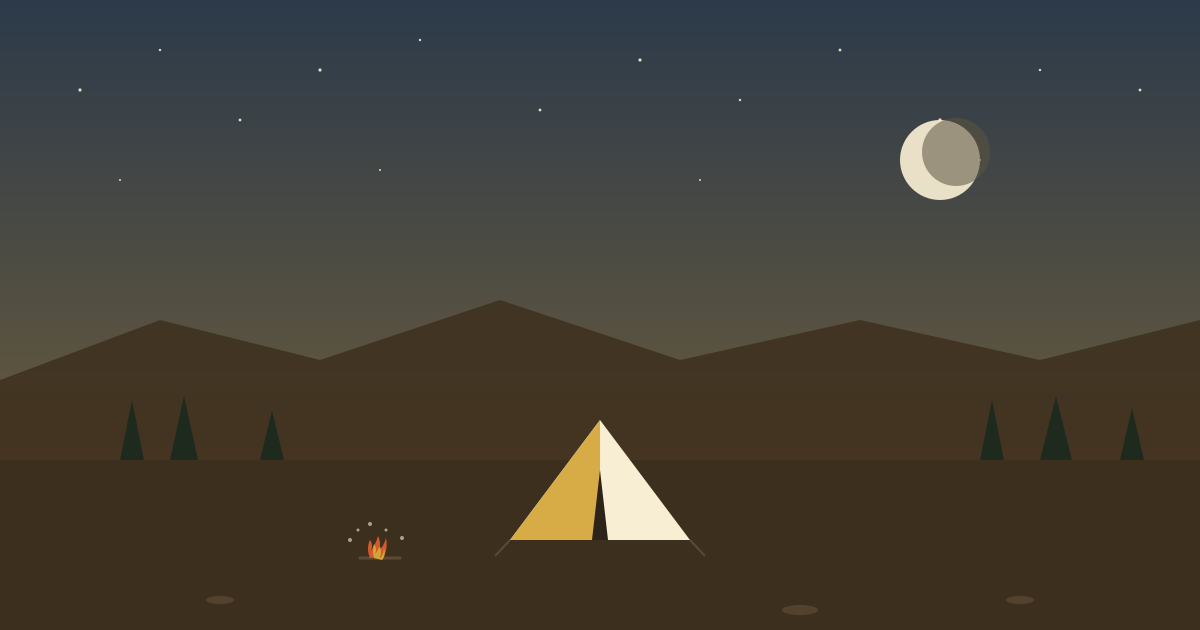
The host and I went back and forth over the price of a canvas bell tent in western Montana for three days. He wanted $220 a night for a plywood platform and a camp stove. I countered with what I’d actually pay: maybe $80, if the place had shade. He finally budged to $150, claiming the property sat in a “natural air-conditioning pocket” by the river. I pictured cool breezes, maybe a nap in the hammock. Instead, I got a valley that trapped every degree of afternoon heat like a cast-iron skillet. By evening, the canvas walls breathed 97°F back at me, and the hammock felt like a convection oven.
Now I have a system. I don’t just look at star ratings or amenity lists. I read elevation maps, check satellite views for tree canopy, and actually call to ask about air conditioning. Here’s how I pick a stay for a heat wave — the hard-won way.
Start with Elevation, Not Aesthetics
The single biggest predictor of comfort in a heat wave is elevation. For every 1,000 feet you climb, the temperature drops about 3-5°F. That means a 7,000-foot site in Colorado might be 15°F cooler than the valley floor. I now filter all searches by elevation. If a property doesn’t list it, I look up the coordinates on a topo map. My rule: for summer trips, I aim for above 5,000 feet in the West, and above 2,000 feet in the Southeast. Coastal properties are also good, but only if they have direct ocean breeze — not a sheltered cove.
For example, I recently booked a safari tent in Colorado at 8,200 feet. The daytime high was 85°F, but by nightfall it dropped to 55°F. I slept under a quilt. Meanwhile, friends who booked a glamping dome in Arizona at 3,500 feet were baking at 95°F at midnight. Elevation is everything.
Shade Is Non-Negotiable
A canvas tent or yurt acts like a greenhouse. In direct sun, the interior can be 10-20°F hotter than outside. That’s why I scrutinize property photos for shade. I look for mature trees casting shadows on the structure, or at least a shaded porch. If the property is in a desert with zero shade, I pass — unless it has a solid roof (like a cabin) and AC.
One of my best heat-wave stays was a treehouse in Washington with a 360-degree canopy of Douglas firs. The temperature inside stayed 8°F cooler than the exposed clearing 50 feet away. I also look for structures with reflective roofs or double-layer canvas. Some high-end domes have a reflective outer skin that radiates heat away. If the listing doesn’t mention shade features, I assume there are none.
Water, Water, Water
I need a way to cool off that doesn’t involve running the AC 24/7. That means a lake, river, or pool within walking distance. I’ve stayed at a yurt in Tennessee with a spring-fed swimming hole — it was the highlight of the trip. Even a cold outdoor shower helps. I avoid properties that say “water access” but require a 15-minute drive. In a heat wave, you want to be able to dunk yourself every hour.
The AC Reality Check
Many glamping sites advertise “air conditioning” but it’s often a window unit that can barely cool a 200-square-foot canvas tent. I now ask: What type of AC? How many BTUs? Does it run on generator or grid power? Portable units with an exhaust hose? Likely inefficient. Mini-splits are better. I also check reviews specifically for “temperature” and “AC.” If multiple guests mention the unit struggled above 90°F, I believe them.
Timing Is Everything
Even with perfect site selection, I plan around the heat. I arrive late afternoon, when the sun is lower, and I set up my own shade with a reflective tarp pitched over the tent (with an air gap). I bring a battery-powered fan and freeze water bottles to use as ice packs. I cook only in the early morning or after sunset — never during peak heat. And I book sites that offer night activities like stargazing, so I have a reason to be awake when it’s cool.
What I Avoid
I no longer book anything described as “desert glamping” without confirmed AC and shade. I avoid properties with black or dark-colored tents — they absorb heat. I avoid sites with no nearby water source. And I avoid any listing that doesn’t answer my elevation question within 24 hours. That’s a red flag.
Now I love summer glamping. The secret is treating heat like a serious constraint and using the tools we have: elevation maps, satellite view, and a few honest questions. That 99°F yurt night was awful, but it made me a better traveler. I hope my mistakes save you from sweating through your sheets.
For more tips on staying comfortable in the outdoors, check out glamping basics and camping in hot weather.
Frequently asked questions
What is the most important factor for staying cool while glamping in summer?
Elevation. Even a 1000-foot gain can drop temperatures by 3-5°F. I always choose sites above 5000 feet in mountain states or coastal areas with onshore breezes.
Is air conditioning common in glamping accommodations?
Not as common as you'd think. Many yurts, canvas tents, and even some cabins rely on passive cooling. Always confirm AC type (window unit vs. mini-split) and BTU rating before booking.
How do I find glamping sites with natural shade?
Look for properties in forested areas or those with mature tree canopy. In deserts, shade comes from structures – check photos for awnings, pergolas, or covered patios. I avoid any site that looks exposed from satellite view.
What should I look for in a water feature for cooling?
Swimmable water is key – a lake, river, or pool. But even a creek you can dunk in helps. I prioritize sites where water is within a 5-minute walk, not a 20-minute drive.
Do blackout tents or reflective covers help?
Yes. Some high-end glamping domes have reflective outer layers. For canvas tents, a silver tarp pitched over the roof (with air gap) can reduce internal temp by 10°F. I carry one just in case.
What time of day should I plan activities during a heat wave?
Early morning and after sunset. I book sites that allow night hiking (stargazing) or have evening programming. During peak heat (noon-4pm), I'm inside with a book or napping.
How do I handle cooking in extreme heat?
Avoid campfires and stoves inside the tent. Use a propane grill outside, and plan no-cook meals like salads, sandwiches, and pre-made foods. I bring a Yeti cooler with ice packs for cold drinks.