Field notes
Glamping Doesn't Fix Your Life (and That's the Point)
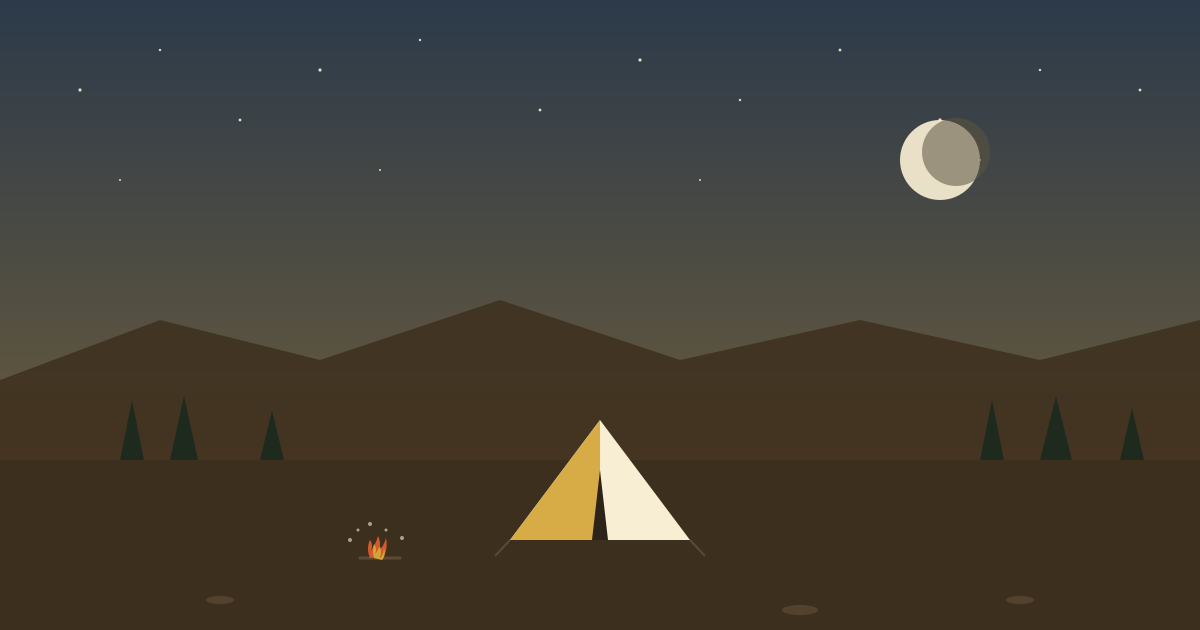
I arrived at the glamping dome in a downpour. Not the romantic kind—the sideways, soaking-everything-before-you-even-unlock-the-door kind. I had driven five hours from the city, convinced this weekend would reset my brain, fix my burnout, and return me to the world as a calm, centered person. I booked the most expensive dome on the property: heated floors, a claw-foot tub, a skylight above the bed. If any place could transform me, this would be it.
The heater wasn’t working. The wood stove was wet. And the rain kept coming. I stood in the middle of that beautiful, useless dome and laughed—not the gracious, accepting laugh of someone who has found inner peace. The hollow, what-have-I-done laugh of someone who spent a month’s discretionary income on a metaphor.
The Myth of the Transformative Trip
We’ve all been sold the idea that the right vacation will fix us. A silent retreat in India. A trek in Patagonia. A weekend in a geodesic dome with a hot tub under the stars. The marketing is seductive: “Find yourself.” “Reset your life.” “Reconnect with what matters.” But here’s the truth I learned in that damp dome: glamping doesn’t fix your life. It won’t heal your childhood wounds, resolve your career crisis, or teach you how to communicate with your partner. What it can do is something smaller and, for me, more valuable.
What Actually Happened
By the second day, the rain stopped. I got the fire going. I sat on the deck and watched a single hawk circle for two hours. I read a book—not a self-help book, just a novel. I took a very long bath. I cooked pasta on a propane stove and ate it with the good olive oil I’d brought from home. Nothing profound happened. No epiphanies. No tears. No life-changing conversations with a wise stranger.
But something did shift: I stopped trying to be fixed. I stopped measuring the weekend against some imaginary benchmark of transformation. I just… was. And that, it turns out, is the real gift.
The Smaller, Truer Thing
Glamping is not therapy. It’s not a retreat. It’s not a shortcut to enlightenment. It’s a comfortable place to be uncomfortable with yourself—to sit in the quiet and notice what comes up. For me, that was boredom, restlessness, and a low-grade anxiety I usually smother with screens, social plans, and productivity. In the dome, I had nowhere to hide. And eventually, the discomfort passed.
What I walked away with wasn’t a new life plan. It was a memory of stillness. A reminder that I can survive my own company. That was it. And that was enough.
Why This Matters for Stress
If you’re googling “does glamping help stress” because you’re desperate, I get it. I was you. The answer is: yes, but indirectly. Glamping removes the obstacles that make regular camping stressful—no tent poles, no cold ground, no middle-of-the-night bathroom treks. That reduction in friction lets your nervous system downshift. But it doesn’t solve the root causes of your stress. It gives you a window to see them more clearly.
Bespoke tip #1: Don’t bring your problems with you. I know that sounds impossible, but I mean literally: leave the work laptop at home. Don’t pack the self-help book about fixing your career. Don’t bring the journal with the prompts about your childhood. Bring a trashy novel and a puzzle. The deep insights come when you’re not looking for them.
How to Actually Use Glamping for Rest
If you want glamping to help with stress, here’s what I’d suggest: treat it as a container, not a cure. The dome, yurt, or cabin is a vessel for whatever you need—sleep, solitude, a good meal, a long walk. Don’t ask it to do more than that.
Bespoke tip #2: Check the weather obsessively before you go, but then ignore it completely once you’re there. I spent the first four hours of my trip checking radar maps and feeling anxious about rain. Finally, I put my phone in a drawer. The rain came anyway. I built a fire. I was fine.
The Anti-Luxury Glamping
Here’s a contrarian thought: the best glamping experiences aren’t the most luxurious. They’re the ones that make you do something. A yurt with a wood stove that requires you to split kindling. A cabin with no electricity that forces you to read by lantern. A dome with an outdoor shower that connects you to the cold morning air. The friction is the point. It’s what separates glamping from a hotel room. It reminds you that you’re alive, that you have agency, that comfort is earned.
The Real Takeaway
I didn’t leave that dome a new person. I left the same person, slightly more rested, with a story about a wet fire and a good bath. And that’s okay. The pressure we put on travel to be transformative is unfair—to the places, and to ourselves. Sometimes a weekend away is just a weekend away. And if you’re lucky, that’s exactly what you need.
So no, glamping won’t fix your life. But it might give you a few hours of peace, a memory of warmth, and the courage to sit with yourself in the quiet. That’s not nothing. That’s actually quite a lot.
Frequently asked questions
Does glamping actually reduce stress?
Yes, but not by magically fixing your problems. It helps by removing daily friction — no cooking, no tent stakes, no cold showers — so your nervous system can settle. The real work of processing stress still needs to happen, but glamping creates space for it.
What should I pack for a glamping trip?
A good headlamp (most sites are darker than you expect), a cozy layer for evening (temps drop fast even in summer), and an open mind. Leave the expectations at home.
Is glamping worth the higher price compared to camping?
If you value comfort and convenience over the 'roughing it' badge, yes. You're paying for a bed, real toilet, sometimes a hot tub — and the time saved on setup. But if you're seeking a transformative experience, don't expect the price tag to deliver that.
How do I choose a glamping site that won't be a letdown?
Read recent reviews for noise levels and mattress comfort — two common deal-breakers. Also check if the site is truly private or just semi-secluded. Look at photos of the actual bathroom facilities, not just the glamour shots.
Can glamping help with burnout?
It can help you hit pause, but burnout requires systemic changes — rest, boundaries, maybe therapy. A weekend in a dome won't undo months of overwork, but it can give you the clarity to see what needs to change.
What's the best glamping experience for a solo traveler?
I loved staying in a small yurt with a wood stove. It forced me to engage with my environment — building a fire, cooking simple meals — without being overwhelming. Choose a site with a communal area if you want human connection, or total isolation if you need silence.
How do I avoid the 'glamping is just expensive camping' disappointment?
Set your intention before you go. Are you here for luxury? For nature? For escape? If you go expecting a resort, you'll be annoyed by the bugs and dirt. If you go expecting a comfortable basecamp, you'll be delighted.