Field notes
Free and Nearly-Free Alternatives When Glamping's Out of Budget
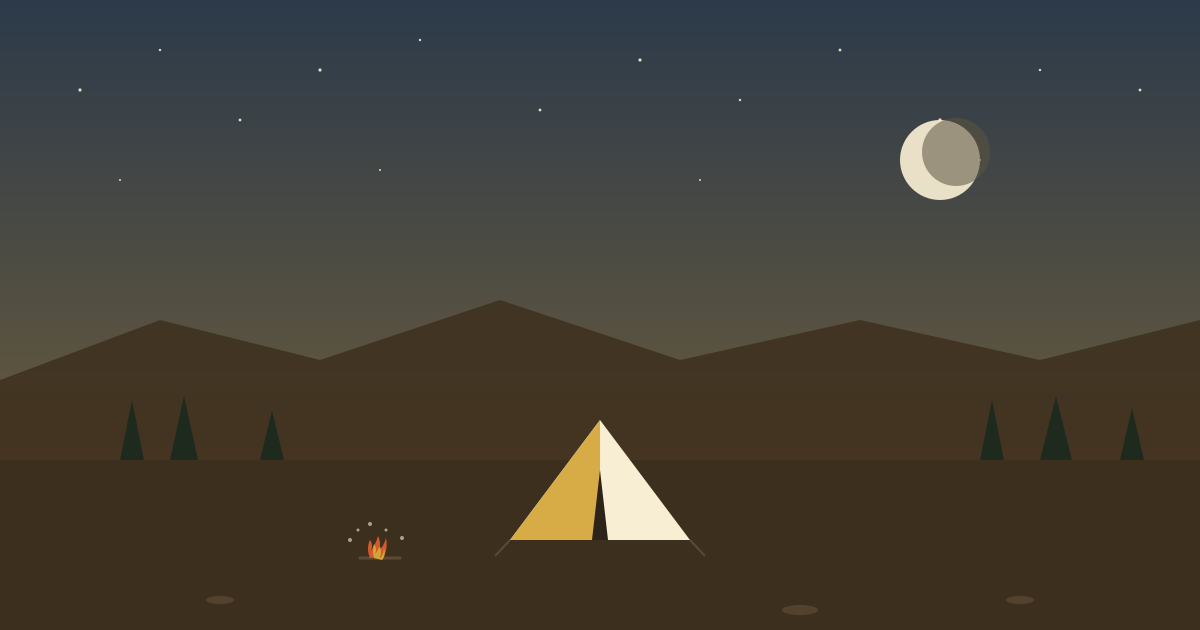
The Moment I Almost Paid $400 for a Canvas Tent
It was late September in Vermont. The air smelled like wood smoke and dying leaves. I’d been scrolling glamping listings for an hour—domes with wood-fired hot tubs, yurts with king beds, safari tents with private chefs—and my wallet was crying. One place wanted $450 a night for a “rustic luxury” bell tent. Rustic luxury? I’d slept in a real tent for free a hundred times. But somewhere along the way, I’d convinced myself that camping without a mattress frame and a mini-fridge wasn’t a vacation.
I almost booked it. Credit card out. Then I checked the weather: clear skies, low of 48°F. Perfect. I canceled the booking, packed my old four-person tent and a bag of freeze-dried pad thai, and drove three hours to a national forest in southern Vermont where I knew the dispersed camping was primo.
That weekend cost me zero dollars. And you know what? It was better than any glamping trip I’ve ever taken.
Why Dispersed Camping Scratches the Same Itch
Glamping is about getting outdoors without sacrificing comfort. But here’s the truth: comfort isn’t the point. The point is waking up to birdsong, making coffee over a fire, and feeling the earth under your back when you step out of your tent. You don’t need a plush robe for that. You need a good spot, a little gear, and zero reservations.
Dispersed camping—camping anywhere on public land that isn’t a designated campground—gives you the exact same immersion, often with more solitude and better views. No generators. No screaming kids at 7 AM. Just you and the forest. And it’s free.
How I Did It: A Beginner’s Blueprint
Find the Land
The best part about dispersed camping? You’re not stuck on a 20x20 gravel pad. You can camp almost anywhere on national forest or BLM land, as long as you follow a few rules: 200 feet from water and trails, not blocking roads, and no stays longer than 14 days (usually).
I use the app FreeRoam to find unmarked roads and pull-offs. Look for the “dispersed camping” overlays. Most forests also have a Motor Vehicle Use Map (MVUM) that shows legal routes. In Vermont, I drove up a gravel forest road until I saw a clearing with a fire ring—already there, probably from a hunter. I pulled in, set up, and didn’t see another soul for two days.
Pack for Self-Reliance
This is the part that scares people: no toilets, no water spigot, no trash cans. But it’s not hard. Here’s my kit:
- Water: 2 gallons per person per day. I bring extra.
- Waste: A portable toilet bucket with wag bags. Yes, you pack it out. Not glamorous, but responsible. Or dig a cat hole 6-8 inches deep, 200 feet from water.
- Fire: A fire pan or a designated fire ring. Check fire restrictions—often banned in summer.
- Navigation: Offline maps or a paper map. No signal out there.
Bespoke tip #1: Bring a small camp trowel and a roll of toilet paper in a ziplock. You’ll thank me at 3 AM when nature calls.
Make It Comfortable
Your tent doesn’t have to be fancy. Mine cost $50 at a garage sale. Key upgrades: a thick foam sleeping pad (not just an air mattress—foam insulates) and a 20°F sleeping bag. At 48°F, I was toasty. I also brought a camp chair, a headlamp, and a small table for cooking.
For dinner, I made a one-pot meal: instant rice, canned beans, and a packet of taco seasoning. It tasted better than any $30 glamping dinner because I cooked it over a fire I built myself.
The $0 Itch: What I Learned
That weekend, I woke up to mist rising off a creek I hadn’t even noticed when I set up in the dark. I made pour-over coffee on my tiny stove. I hiked for hours without seeing a soul. I read an entire paperback by headlamp. And when I left, I felt more restored than any glamping trip where someone else makes the bed.
Bespoke tip #2: Craving a hot shower? Bring a portable camp shower bag (black, solar-heated). Hang it from a tree, let it heat up in the sun, and you’ve got a perfect rinse. Or just embrace the grime—that’s part of it.
When Dispersed Camping Won’t Work (and What to Do Instead)
Look, I’m not saying glamping is bad. I’ve reviewed dozens of glamping sites, and they’re wonderful for couples wanting romance or families with zero gear. But if your wallet is tight, here’s the hierarchy:
- Dispersed camping – Free, requires gear and guts.
- National forest campgrounds – $10-20 a night, bring your own tent, but you get a picnic table and vault toilet. Often bookable on Recreation.gov.
- State park walk-in sites – $15-30, usually no hookups, but clean and safe. Great first step.
- Rustic cabins – $50-80 a night, often with bunk beds and a wood stove. Check for cabins in state parks or national forests—they’re cheaper than commercial glamping.
I’ve done all four. Dispersed camping is the cheapest, but also the most rewarding once you get past the fear of being “rough.” And if you really can’t stomach sleeping on the ground, find a friend with a camper van and offer to buy the gas. That’s how I did my first “free” camping trip—a friend let me sleep in the back of his minivan.
The Honest Truth
I write for a glamping directory. I should be pushing you to book a $350 dome with a hot tub. But I’d rather have you outside, period. If you’re reading this thinking “I can’t afford that,” you don’t have to. You can have an incredible weekend for $0, and I’ll tell you exactly how.
That weekend in Vermont cost me nothing but gas and a few meals. I came home covered in campfire smoke and dirt, and I felt rich. Not rich in money—rich in quiet, in stars, in the smell of pine needles. You can’t buy that. But you can find it, for free, in any national forest near you.
Go find your spot. Pack light. Leave no trace. And when you wake up to the silence, you’ll understand why I’m writing this.
— A glamping writer who still prefers a tent.
Frequently asked questions
What's the difference between dispersed camping and a regular campsite?
Dispersed camping means camping anywhere outside of a designated campground, usually in national forests or BLM land. There are no amenities—no toilets, no fire rings, no picnic tables—but it's free and you get total solitude.
Is dispersed camping legal everywhere?
No. It's allowed on most national forest and BLM land unless posted otherwise. Check the specific forest or district website for rules. Avoid private land, state parks, and national parks (which usually require permits or campgrounds).
What do I need for dispersed camping that I might not bring to a glamping site?
A portable toilet or wag bag (for human waste), a shovel, plenty of water (or a filter), a map or GPS since there's no cell service, and a fire pan if you want a campfire (or just skip the fire).
How do I find a good dispersed spot?
Use apps like iOverlander or FreeRoam, or just drive forest service roads and look for existing pull-offs with a fire ring. The key is to find a spot at least 200 feet from water and trails, and not blocking any road.
Is dispersed camping safe?
It's as safe as any remote camping. You're alone and away from help, so be prepared: tell someone your plan, carry a first aid kit, and know wildlife safety (bear canisters mandatory in some areas). It's not dangerous, but you need self-reliance.
Can I dispersed camp in winter?
Yes, but many forest roads are closed or impassable. You need a 4WD vehicle and serious cold-weather gear. I've done it in Colorado at 20°F—it's intense but rewarding. Check road conditions and weather before you go.
What if I don't have camping gear?
You can rent gear from REI or a local outfitter. For a cheap version: borrow a tent from a friend, or sleep in your car. I've done that—air mattress in the back of a minivan—and it's surprisingly comfortable.