Field notes
The Ethics of the "Untouched Wilderness" Marketing Photo
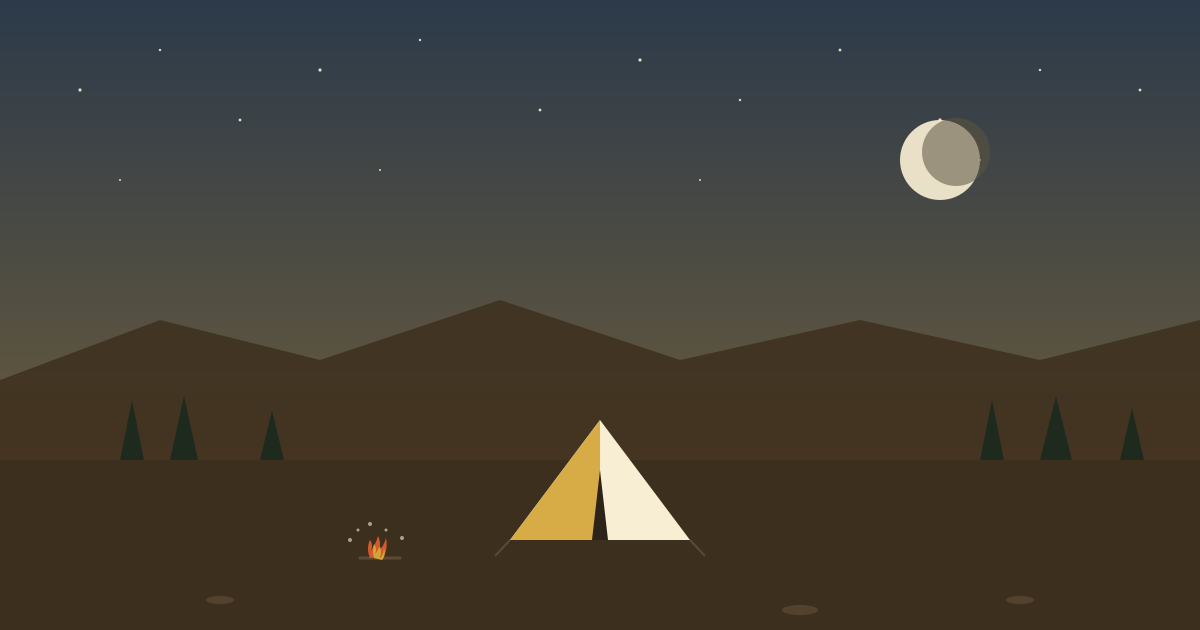
The Photo That Made Me Question Everything
I stood in the drizzle, shivering despite my down jacket, staring at a glossy brochure image that had sold me on a “remote wilderness dome” in the Colorado Rockies. The photo showed the dome perched on a cliff, alone against a sunset, with nothing but pine trees for miles. The reality: my dome was 300 yards from a paved parking lot. I could hear car doors slamming. That morning, I’d huffed my gear up a gravel path while a family rolled a cooler past me. The disconnect hit me like a cold front.
This isn’t a rant about the place itself—it was lovely, with a wood stove and a skylight for stargazing. It’s about the ethics of the “untouched wilderness” marketing photo, a staple of glamping imagery I’ve come to see as a form of greenwashing. We’re sold the fantasy of total isolation, of stepping into a pristine landscape untouched by humans. But the reality often involves a generator, a composting toilet, and a neighbor whose dome you can see through the trees. That fantasy comes with a price tag, and you’re the one paying it.
The Lie of the Lone Structure
The typical glamping photo shows a single tent or cabin in vast, empty scenery. No other structures. No roads. No signs of human presence. This isn’t just aspirational—it’s deceptive. Most glamping sites cluster units to maximize land use and provide utilities. That photo of a lone dome? It’s often taken from an angle that hides the parking lot, the manager’s office, and the other five domes just out of frame. I’ve stayed at places where the “remote” cabin was actually part of a loop of ten similar cabins. The photo just didn’t show them.
This matters because it sets up an expectation that leads to disappointment. But worse, it romanticizes the idea of “wilderness” without the inconvenience of actual solitude. The best glamping tip I ever got was from a host in Vermont: “If you want isolation, book the last unit in the row, or ask which site has the most trees between you and the next one.” That’s a real tip you’ll never see in a glossy brochure.
The Greenwashing of Remote
“Remote” is the favorite buzzword of glamping greenwashing. It implies you’re leaving no trace, that your stay is eco-friendly because you’re far from civilization. But many of these “remote” sites require vehicle access, infrastructure, and energy—often from diesel generators or propane. I’ve been in a “sustainable” yurt that burned through a propane tank every three nights for hot water. The marketing photos showed only the yurt, not the propane delivery truck that came weekly.
True eco-glamping exists—sites like those on /glamping that use solar, composting, and rainwater collection. But the photo of a lone structure against a mountain is not proof of ethics. It’s a marketing tool. My second bespoke tip: look for photos that show the whole property, including roads and other units. If they only show angles that hide infrastructure, ask why.
What the Photo Doesn’t Show
Photos also erase the impact of your stay. That pristine meadow? It might be trampled within a season. The quiet night sky? Soon glowing with string lights and fire pits. I’ve stayed at a /safari-tents site in California where the marketing showed a deer grazing near a tent. In reality, the deer were habituated to humans and the site had to enforce strict food storage rules. The photo sold a fantasy of coexistence. The reality was management.
I’m not saying glamping is inherently bad. I’ve had incredible experiences in /treehouses in Oregon and /domes in Arizona. But we need media literacy around these images. Ask yourself: What’s outside the frame? Is that sunset photo taken during a rare clear evening after a week of rain? Does the “endless forest” actually border a highway? The answers matter.
The Ethics of Depicting Wilderness
The deeper issue is that these photos reinforce a colonial, romanticized view of wilderness as empty and available for consumption. They erase the fact that many glamping sites are on stolen indigenous land, or that the “untouched” landscape is actually a managed forest. I’m not suggesting every glamping photo should include a land acknowledgment. But the pretense of isolation is a lie that can harm local ecosystems and communities.
When we book based on these photos, we vote for that fantasy. We tell the industry that what we want is the appearance of wildness, not the reality. And that leads to more development in fragile areas, more greenwashing, and more disappointed travelers. The industry hears us loud and clear.
What to Do Instead
Look for sites that show the whole picture. /Cabins in Vermont often do this better—they show snowy paths between units, proving you’re in a community, not alone. Read reviews carefully: if people mention noise from other guests or the parking lot, believe them. And finally, adjust your expectations. The best glamping experiences I’ve had were the ones where I knew the setup: a cluster of domes with a central bathhouse, or a row of bell tents with a shared fire ring. Honesty beats fantasy every time.
The next time you see that photo of a lone yurt against a sunset, pause. Ask yourself what’s missing. And then book with your eyes open, knowing that 300 yards from a parking lot can still be magical—as long as you’re not expecting untouched wilderness.
Frequently asked questions
Is glamping always eco-friendly?
No. Many glamping sites market sustainability but lack real eco-practices. Always check for certifications or ask about waste management, energy sources, and water usage.
How can I spot greenwashing in glamping listings?
Look for vague terms like 'eco-friendly' without specifics. Check for evidence of solar panels, composting toilets, or water conservation. Genuine sites often detail their practices.
Does glamping damage the environment?
It can, especially if sites are built in sensitive areas without proper planning. Foot traffic, waste, and light pollution affect wildlife. Choose sites with low-impact designs.
What's the best way to find ethical glamping?
Use directories that vet for sustainability. Read reviews about the location's impact. Prioritize sites that use renewable energy, have minimal footprint, and support local communities.
Should I avoid glamping altogether to be ethical?
Not necessarily. Glamping can be a stepping stone to camping for newcomers. Just be mindful of your choices: stay longer, use resources sparingly, and support sites with genuine eco-commitments.
How does the photo of 'untouched wilderness' mislead?
It implies you're in pristine nature, but often the site is near roads or infrastructure. This creates unrealistic expectations and can lead to overcrowding in fragile areas.
What questions should I ask before booking a glamping site?
Ask: How far are neighbors? What's your waste management? Are you on a grid or off? Do you use chemical-free products? How do you minimize light pollution?