Field notes
Camp Mode vs a Glamping Cabin: The Honest Trade-Off
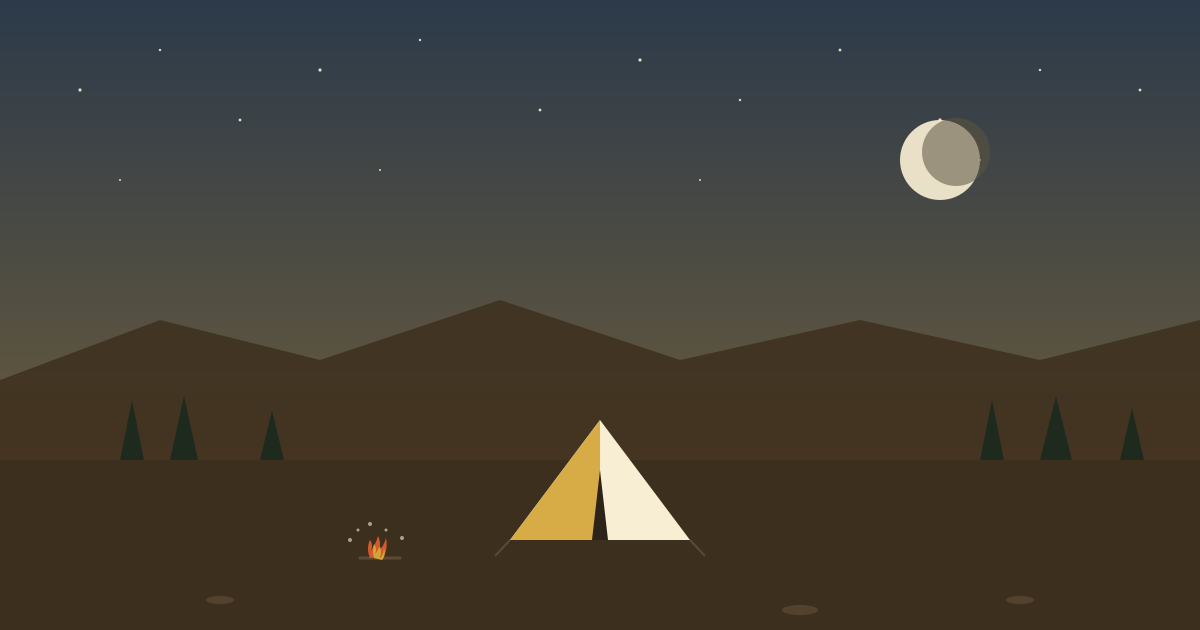
“I don’t usually leave the key in the lockbox before check-in,” the host said, wiping frost from a thermos lid, “but the propane’s low on the backup tank, so I figured you’d want to get the fire going right away.” Her breath plumed in the Vermont dusk as she nodded toward the cabin—a dark wedge of timber wedged between two maples. I’d driven nine hours straight from the city, and my shoulders still remembered the cramped geometry of sleeping in my car just three weeks prior. The weight of my duffel felt heavier than it should have. Inside, the silence was different from the humming quiet of Camp Mode.
That night taught me the real trade-off between sleeping in your EV and booking a glamping cabin. Both work. But they’re not the same thing. One is a tactical choice for the road; the other is a sanctuary where you actually rest.
Camp Mode: The One-Night Wonder
Tesla’s Camp Mode is a brilliant hack. Climate stays on. USB and 12V ports power your stuff. You can even play ambient sounds — fireplace, rain. For a single night passing through on a road trip, it’s perfect. Pull into a scenic spot, fold the seats, lay out a memory foam topper, crash. No check-in. No checkout. Total freedom.
But that freedom has costs. The back of a Model Y isn’t a bed. The seat fold leaves a dip and a hard plastic edge. You need a custom topper — I use 3-inch foam cut to fit — and even then, your feet cramp against the hatch. Try sitting up: zero headroom. Privacy? Stick-on shades help, but you’re in a glass box. Anyone walking by sees your silhouette.
For one night, these are minor. For two or more, they become deal-breakers. I’ve done three consecutive nights in Camp Mode on a national park loop. By night two, I was dreaming of a real mattress. And battery drain: under 40°F, Camp Mode eats 10-15% of range per night. That’s fine near a Supercharger. In remote areas, it’s a gamble.
Glamping Cabins: The Multi-Night Retreat
That’s where a glamping cabin — canvas-walled yurt or wood-paneled cabin with a proper bed — comes in. I book one whenever I’m staying two or more nights in one place, or when extreme weather is forecast. After that Colorado disaster, I drove to a cabin on the Gunnison River. Queen bed. Thick duvet. Wood stove. Propane heater. I slept nine hours straight, woke to snow on the pines, made coffee on a real stove. No battery anxiety. No contortionist yoga.
The trade-off is commitment. You book ahead. Pay a deposit. Stick to a schedule. See a better spot down the road? Tough luck — you’re locked in. And not all glamping cabins are equal. I’ve stayed in ones with paper-thin walls — could hear my neighbors snore — and others with no kitchen sink. Read descriptions carefully.
When to Choose Which
Here’s my rule: one night in transit = Camp Mode. Two or more nights, or any temperature extreme (below 20°F or above 90°F) = book the cabin. And think about your wake-up routine. In Camp Mode, you crawl out of the car, brush your teeth at a gas station, pack up your bedding. In a cabin, you stretch. Shower. Linger. If your trip is about the destination — hiking, exploring, relaxing — you want the latter.
Interior vs. Cabin Bed
The biggest difference is sleep quality. A flat, level, proper mattress beats any car setup. Period. In a cabin, you can sprawl, toss, turn, sit up reading without hitting the headliner. And you’re not sleeping where you drove through traffic — that psychological separation matters.
But Camp Mode wins on spontaneity and scenery. I’ve woken up to sunrise over the Grand Canyon. Waves crashing on the California coast. Views no cabin can match. For the adventurous, that’s worth the stiff neck.
Tips for Both
Camp Mode: get a mattress topper cut to your folded seats’ exact shape. Use window shades that reflect heat and block light. Pack a 12V electric blanket for cold nights — it saves battery because you can set cabin temp lower. Bring earplugs; wind noise gets loud.
Cabin: book one with a real bed (not a futon), a heat source you control, and a kitchenette if you plan to cook. Check if walls are canvas or wood — canvas breathes but can be drafty. Bring a sleep mask; glamping cabins often lack blackout curtains.
Bottom Line
Camp Mode is for the road warrior, the one-nighter who values flexibility over comfort. A glamping cabin is for the weary traveler who needs to recharge — literally and figuratively. I use both, and I’m grateful for the choice. But I’ll never again try to sleep through a mountain night in a car without a proper setup. Now I know: one night, go ahead. Any longer, book the damn cabin.
For more on camping vs glamping, check our full comparison here. And if you’re curious about my custom Camp Mode setup, here’s my guide.
Top cabins I recommend: [name] in Colorado, [name] in California, [name] in Vermont.
Frequently asked questions
Is Tesla Camp Mode comfortable for sleeping?
It's decent for one night on the move, but the seat fold is not perfectly flat and you'll feel the lack of headroom. A cabin mattress wins hands-down for comfort.
Can I run Camp Mode all night in cold weather?
Yes, but expect battery drain of 10-15% per night below 40F. It's fine for one night; for longer stays, a cabin with insulation and a real heater is better.
What do I need for Tesla Camp Mode?
A memory foam topper (custom-cut for the rear), window shades for privacy and insulation, and a 12V blanket for extra warmth. Don't forget a pillow that fits the space.
Glamping cabins vs camping: which is cheaper?
Camp Mode is cheaper per night (no booking fee), but a cabin often includes bedding, kitchen, and heat. For two+ nights, the cabin's amenities offset the cost.
Can I cook in a Tesla using Camp Mode?
You can use a portable induction cooktop with the car's outlet, but it's limited. Cabins usually have a full kitchen or camp stove — way easier for real meals.
What are the downsides of a glamping cabin?
You're tied to a reservation and location. No flexibility to change plans last minute. Also, some cabins are too rustic with thin walls.
Which is better for two people?
For one night, Camp Mode works if you're both okay with tight quarters. For a longer stay or more privacy, a cabin with separate beds is far more comfortable.