Field notes
The Best Glamping in Alaska
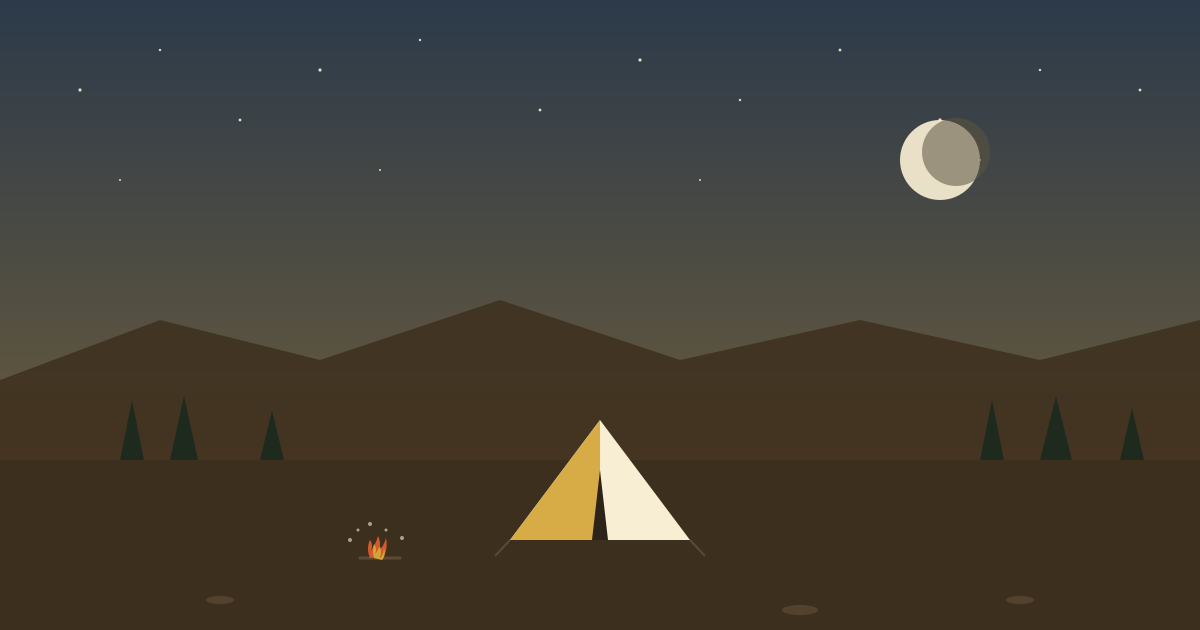
The first sound of dusk was the snap of a fallen branch under something heavy—then silence. I paused mid-sip of my tea, standing on the deck of my canvas-walled yurt tucked into a cove of Blue Ridge granite, the air thick with crushed pine needles and woodsmoke from the stove. Not the metallic clatter of a bear rifling through a cooler, just a slow, deliberate crunch as a whitetail doe eased out of the laurel thicket. She flicked an ear at my stillness and kept moving, dissolving into the twilight as if she’d never been there at all. That’s when I realized why I was here.
Alaska is a different beast. Forget cushy yurts in the Lower 48. Here, glamping means balancing comfort with raw wilderness. The best sites are off-grid, solar-powered, and often only reachable by floatplane or rutted gravel roads. The payoff is solitude on a scale that makes even the busiest summer solstice feel like the whole state is yours. But it’s not for the faint of heart. Weather changes in minutes. Wildlife treats your tent as a curiosity. Logistics require multiple backup plans. I’ve done the legwork — and the mistakes — so you don’t have to.
Start with Seward. This is the glamping capital of Alaska, and for good reason. Resurrection Bay, ringed by mountains and glaciers, is postcard-perfect. The real draw is Kenai Fjords National Park. I stayed in a canvas cabin on stilts with a wood-burning stove and a front porch facing the water. The host left a thermos of hot chocolate and a note about the moose that frequents the path. No electricity — just oil lamps and a solar charger for phones. If you need Wi-Fi, look elsewhere. The experience is about disconnecting. I spent two days kayaking among icebergs and one afternoon hiking to Exit Glacier, where I touched ancient ice. At night, I cooked salmon over a campfire and listened to the distant crack of calving glaciers. Magical, but busy — Seward’s glamping spots book out months in advance. Reserve by February for July.
Then there’s Homer, the self-proclaimed “end of the road.” This is where the Alaska glamping scene gets eclectic. Geodesic domes perched on bluffs overlooking Kachemak Bay. Cabins buried in spruce forests. A yurt village with a sauna. The Homer Spit, a skinny strip of land jutting into the bay, is packed with art galleries and seafood shacks, but the best glamping sites are across the bay, reachable only by water taxi. I took a 20-minute boat ride to a private cabin with a cast-iron tub on the deck. Soaking in steaming water while sea otters floated past was peak Alaska. Weather here is fickle — I had three days of rain and one perfect, clear evening that made it all worth it. Bring binoculars. The birding is insane: puffins, murres, eagles. And if you fish, Homer is halibut central. Many hosts can arrange a charter that drops you at the dock steps.
Further north, Denali and Fairbanks offer a different vibe. Denali’s glamping is more rustic — safari tents with propane heaters and cots. The draw is wildlife: grizzlies, wolves, caribou. I spent a night in a tent camp just outside the park boundary. The host had an electric fence around the cook tent. “Bears learned that tents mean food years ago,” he told me over reindeer sausage. Despite the fence, I slept with bear spray under my pillow. The next morning, a lynx crossed the path. This isn’t glamming — it’s wilderness with a mattress.
For the full off-grid experience, consider Talkeetna or the Brooks Range. More planning required — think flights on small planes or long drives — but the reward is absolute silence. I once stayed in a solar-powered cabin near Talkeetna with no neighbors for 20 miles. The only sounds were wind and ravens. At night, the aurora danced green and purple across a sky black as ink. The host left a journal of previous guests’ sightings: moose, bears, a wolverine. I didn’t see the wolverine, but I felt like I was part of a secret club.
Logistics: Alaska glamping is expensive. Expect $200-$500 per night, and that’s before activities. Most sites are fully booked by March. And don’t assume a rental car will cut it — some access roads require 4WD or high clearance. I ruined a sedan’s undercarriage on a washboard road near Seward. Lesson learned.
Packing: layers, waterproof boots, a sleep mask (midnight sun), insect repellent (June mosquitoes are biblical), and a headlamp. Most sites provide bedding, but I always bring a merino base layer. Bear spray is non-negotiable. And a camera with a good zoom lens — wildlife won’t pose.
Alaska’s glamping scene is expanding, but it’s still niche. The hosts are often former guides or homesteaders who know every trail and tide pool. Ask them questions. They’ll tell you where the bears are that week, which streams are running with salmon, and how to spot a moose before it spots you.
If you want more inspiration, check out our complete glamping guide or dive into specific tips for camping in Alaska’s backcountry. For Seward specifically, see our glamping in Seward page, and for Homer, head to glamping in Homer. From canvas cabins to geodesic domes, these listings have the inside scoop.
Ultimately, Alaska glamping is about accepting imperfection. You’ll get rained on. You’ll get bitten. You’ll probably forget something crucial (for me, it was the sleep mask). But you’ll also get nights where the sun barely dips below the horizon, painting the sky in pastels for hours. And you’ll understand why people sell everything and move here. The wild is worth the hassle. Go prepared, go humbly, and let Alaska reset your sense of scale.
Frequently asked questions
When is the best time for glamping in Alaska?
June through August for long daylight and mild temps; September for Northern Lights but colder nights. Avoid May if you hate mosquitoes.
Do I need bear spray for glamping in Alaska?
Absolutely. Even if your tent has a hard side or electric fence, carry bear spray on hikes. I never leave a site without it.
Can I see the Northern Lights while glamping?
Yes, but not in summer (too much daylight). Book late August or September at a site with no light pollution. Fairbanks or Talkeetna are best.
What should I pack for Alaskan glamping?
Layers, waterproof boots, a sleep mask (midnight sun), insect repellent, and a headlamp. The sites provide bedding, but I always bring a merino base layer.
Is glamping in Alaska expensive?
Yes, expect $200–$500/night. But compared to hotels, you get immersion in wilderness that you can't get elsewhere. Worth it for the experience.
Do I need a 4WD to reach glamping sites?
Many do require high-clearance or AWD. The turnoff to my cabin in Seward was a rutted gravel road—definitely not rental-car friendly. Check access details.
Are there glamping sites that allow dogs?
Some do, but always call ahead. Alaska is not easy on pets (bears, porcupines). I've seen dogs get spooked by moose. Unless your dog is wilderness-savvy, leave them home.